
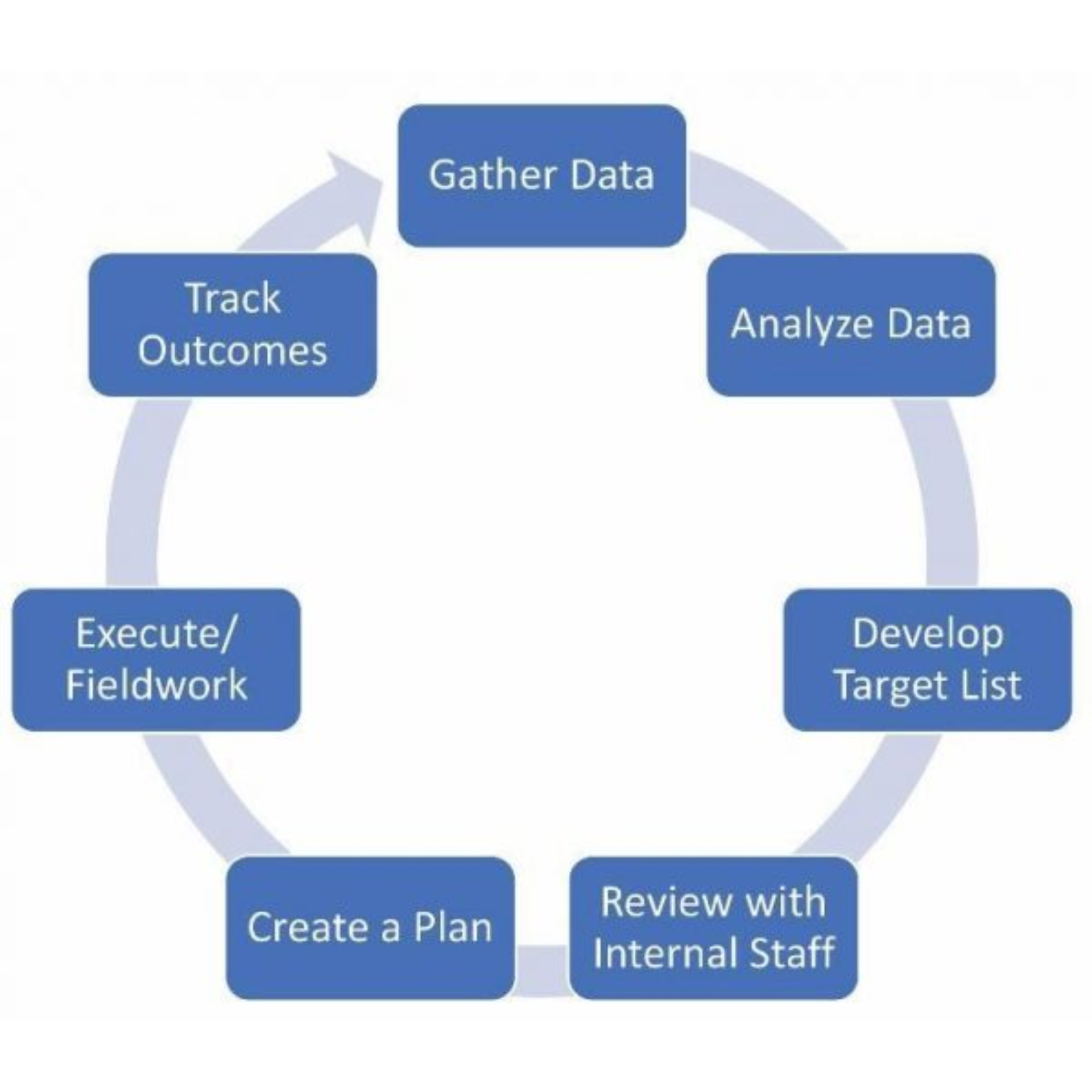
Attracting referrals is unique to every medical practice, and there's no "one size fits all" strategy for increasing your patient base through referrals. Most likely, you already have a few cherished sources you rely on to send new patients your way. However, every practice can follow a few fundamental steps to generate new referrals. Real results don't happen on their own, but there is an effective cycle you can put in place to turn the wheels of your marketing in a positive direction.
Attracting Referrals – A Cycle for Growth
July 22, 2020
Attracting Referrals: A Cycle for Growth
Gather & Analyze Data
Getting started begins with analysis and an honest look at how new patients are finding your door. First and foremost, a tracking process is essential. Most practices can identify their referral sources through the patient intake form. In a perfect world, a new patient would answer two questions: "Where did you hear about us?" and "Where did you get our contact information?" While these appear similar, the difference is who and how. The goal is to determine which people are sending referrals your way, but it's also important to identify how they're finding your contact information. For instance, are prospects going to Google, Facebook, your website, or some other directory? Understanding where patients are searching for information will help you determine where to focus your marketing efforts.
Oftentimes, there's a discrepancy between the perception of where patients are coming from and the actual raw data. One might assume a referral source is generating several patients a week, when it may only turn out to be one or two new patients per month. It's crucial for a physician's staff to be proactive and accurately document referral sources. As the first spoke in your wheel, accurate data lays the foundation you'll build everything else on. Once referral data is gathered, analyze the demographics of your patients by looking at characteristics such as gender, age, insurance plans, where they live, where they work, and other similarities. This insight is essential for identifying new opportunities to attract referrals.
Create a Targeted List
Now that you've established where your current patients are coming from and the demographics of your current patient base, it's time to think creatively about how you can generate new referral sources. The following questions can help as you develop new targets:
- Is there a certain type of physician, specialty, or group from whom you'd like to attract more referrals?
- Do you have a particular insurance plan that provides better reimbursement to your practice than others?
- Is there a new procedure or treatment you need to promote?
- Are there new physicians or providers who have joined your practice?
- Would you benefit from building relationships with primary care offices?
- What sets your practice apart from the competition?
- To whom can you best promote your competitive advantages?
- Are there non-medical groups or community events your practice can partner with?
Create & Execute Your Plan
Your staff knows you and your patients best! Review the data and your potential new targets internally with your staff and create a plan. Roughly 7–11% of your gross revenue should be budgeted for marketing. This should include public relations, marketing, SEO, Google Ads, community relations, printing, promotional items, sponsorships, and other miscellaneous spending. Assess how you've budgeted your marketing dollars in the past and identify what has worked and what hasn't.
The execution of your plan is where the rubber meets the road. Determine who will be responsible for carrying it out. Simply adding more responsibility on top of your employees' existing tasks isn't likely to produce maximum results. You may find it necessary to hire a physician liaison, bring on a marketing firm, or build a dedicated marketing team to ensure the best return on your marketing dollars. While the action steps will be unique to each plan, the key is action — the best-formed plan is useless without execution.
Track Outcomes
An effective marketing plan must remain flexible and be monitored constantly. Knowing your numbers, and using them to refine your marketing efforts, brings you full circle through the cycle that will continue to feed and fuel your marketing. Use your patient intake form to track where your new patients are coming from on a weekly basis. As you gather this data, compare and analyze growth (or lack thereof) from different referral sources to determine what's working and where you need to tweak your approach. Referral sources worth tracking include:
- Established patients
- Internet: Google, Yelp, Healthgrades, Vitals, Facebook, and others
- Hospitals, urgent care centers, general practitioners, specialists
- Health fairs or community events
- Seminars & speaking events
- Directories: Angi or other online forums
- Advertising campaigns: direct mail, newspaper, billboard, etc.
Be diligent about tracking all referral sources, and keep the cycle moving to maximize your marketing efforts!
Partner with Experts
If this all seems a bit overwhelming, don't go it alone! Full Circle PR is the nation's leading medical marketing and public relations agency specializing solely in the healthcare profession. Our team offers an array of services to meet a variety of marketing needs and budgets, and we have a proven record of successful partnerships with practices of every size, from solo practitioners to large medical groups.

Marketing works. Just ask any company that creates a campaign to promote its products with the goal of gaining sales. Medical practices work the same way, except "products" become services and "sales" become patients. These practices exist to provide healthcare to the community, and marketing allows them to do just that.

Have you "Googled" yourself or your practice lately? More people than ever are turning to the internet for information, and many new patients will "Google" a physician or medical group before deciding to become a patient. Are your reviews positive or negative? Have you responded within HIPAA guidelines? The vast majority of patient complaints aren't related to actual medical care, but to customer service. When patients are frustrated with rudeness, inattention, or long wait times, today's response is often to vent online with the click of a mouse.

Established Patients: Your Practice's Secret Marketing Weapon

In today's increasingly competitive healthcare environment, medical practices must use strategic planning tools to distinguish themselves. Understanding patient expectations and market dynamics is crucial for maintaining a leading position. Let's discuss the benefits of a few marketing and research tools that can fuel the growth of your medical practice.

In today’s digital age, social media has evolved beyond mere connectivity – it has become a cornerstone for patients seeking reliable dermatology information and services. According to recent data, over 20% of new dermatology patients are influenced by platforms like YouTube, Facebook, Instagram, LinkedIn, and TikTok. This article explores these platforms individually and outlines effective [...]

Medical marketing mishaps are errors or mistakes made in the process of promoting healthcare, services, or organizations. These mishaps can have negative consequences and may damage a practice brand's reputation which may lead to... ...legal issues, loss of patient volume/trust, or result in ethical concerns. Full Circle PR can help your practice avoid making [...]

Do you know where your new patients are coming from? Knowing the patient referral source can help you pivot your marketing strategy on demand and will help you in the long run. If you don't know, then it is vital for you to be implementing a marketing campaign that will not only serve your [...]
Roughly 7-11% of your gross revenue should be budgeted for marketing. It’s always best to review your data and potential new targets internally with your staff and create a plan. This should include marketing, public relations, SEO, Google Ads, community relations, printing, promotional items, sponsorships and other miscellaneous marketing costs. Assess how you have [...]

In today's fast-paced business world, data is the driving force behind informed decisions and successful strategies. And at the heart of data-driven excellence lies the magic of tracking numbers! An effective marketing plan must remain flexible and be monitored constantly. Knowing your numbers and using them to modify your marketing efforts brings you full [...]
Patient-Centric Content Marketing goes beyond promotional materials – it's about delivering informative, relevant, and empathetic content that addresses the unique needs of patients and their families. Knowledge is Power: By providing accurate, easy-to-understand medical material, we empower your patients to make informed decisions about their health journey. From articles and blog posts to videos [...]


 FREE CONSULTATION